There is a particular kind of generosity that costs nothing but time and a willingness to sit still for thirty minutes. Volunteering to donate blood, plasma, or bone marrow asks for something genuinely personal — not your money, not your expertise, but a part of your own body. That strangeness is also what makes it so meaningful, both to the people who receive it and to the people who give it. If you've ever wondered how to volunteer for blood donation and what the experience actually involves, this guide walks you through every stage — from eligibility to the quiet moment after the needle comes out.
Why Blood and Plasma Donation Counts as Donating Time
We tend to think of volunteering as showing up to sort food at a pantry or walk dogs at a shelter. Blood donation rarely gets framed the same way, but it fits squarely within the idea of donating time — you are giving a scheduled portion of your day, your physical presence, and something irreplaceable that your body will replenish. A whole blood donation typically takes about an hour from check-in to recovery biscuit. A plasma donation runs longer, often ninety minutes to two hours. Bone marrow donation, the most involved of the three, can require a recovery period of days.
The key difference from most volunteering is that what you give cannot be manufactured or substituted. No factory produces human blood. No algorithm generates compatible stem cells. When a trauma patient needs transfusions, a premature baby needs platelets, or a leukemia patient needs a marrow transplant, a real person had to have said yes on a Tuesday afternoon and rolled up their sleeve.

As an Amazon Associate, I earn from qualifying purchases.
The Three Types: Blood, Plasma, and Bone Marrow
Whole Blood Donation
This is the most common form. A trained phlebotomist draws roughly 450–500 millilitres of blood — about one pint — from a vein in your arm. The entire collection takes eight to ten minutes, though the full appointment including registration, a health screening, and post-donation rest runs closer to an hour. Your body replaces the fluid portion within about 24 hours; red blood cells take closer to four to six weeks, which is why most organisations ask whole blood donors to wait at least 56 days between donations.
Donated whole blood is then separated into components — red cells, platelets, and plasma — so that a single donation can serve multiple patients. This separation process happens at a processing centre after your blood leaves the donation site.
Plasma Donation (Apheresis)
Plasma is the pale yellow liquid component of blood, rich in proteins and clotting factors. It is used to treat burn victims, patients with clotting disorders, and people undergoing certain surgeries. Plasma donation uses a process called apheresis: blood is drawn, the plasma is separated by a machine, and the remaining red cells and platelets are returned to your arm through the same needle. Because your red cells come back, the recovery time is shorter and donation frequency can be higher — some organisations allow plasma donation as often as every two weeks.
The appointment is longer than a whole blood session, typically ninety minutes to two hours, because the machine works in cycles. Many donors use the time to read, watch something on their phone, or simply rest.
As an Amazon Associate, we earn from qualifying purchases.
Bone Marrow and Stem Cell Donation
Bone marrow donation is the most significant commitment of the three and is worth understanding clearly before you sign up. There are two methods. The first, peripheral blood stem cell (PBSC) donation, involves a course of injections over several days before donation that stimulate your bone marrow to release stem cells into the bloodstream. These are then collected via an apheresis process similar to plasma donation — no surgery required. The second method is a surgical procedure under general or regional anaesthesia in which marrow is drawn from the back of the pelvic bone using needles. Most donors experience soreness and fatigue for a few days to a couple of weeks afterward.
Joining a bone marrow registry usually starts with a simple cheek swab to type your tissue. A match may be found immediately or years later — or never. The commitment you make when you register is a willingness to be called on if needed, which is a different psychological experience than the regular rhythm of blood or plasma donation.
Eligibility: What Most Organisations Look For
Eligibility criteria vary by country and organisation, but the broad principles are consistent. For whole blood, you generally need to be at least 17 or 18 years old, weigh above a minimum threshold (often around 50 kg / 110 lbs), and be in general good health on the day. You will be asked about recent travel to regions with certain infectious diseases, recent tattoos or piercings, medications, and other medical history. A rapid haemoglobin check — usually a fingerprick test — confirms your iron levels are adequate before donation proceeds.
Temporary deferrals are common and not a cause for alarm. A recent cold, a new tattoo, or a recent trip abroad might mean you're asked to come back in a few weeks or months. Permanent deferrals are less common and relate to specific medical conditions or exposure risks that could affect the safety of the blood supply.
It's worth checking directly with your national blood service or a regional centre, as rules have evolved over time and differ internationally. Many exclusions that were once permanent have been revised as the science has improved.
What Actually Happens on the Day
For first-time donors, knowing exactly what to expect reduces the anxiety that can make people put off going. Here is what a typical whole blood donation appointment looks like:
- Registration: You check in, show identification, and complete a health questionnaire — usually on paper or a tablet — covering your medical history and recent activities. This is confidential.
- Mini health check: A staff member measures your blood pressure, pulse, and haemoglobin level. This is to protect both you and the recipient.
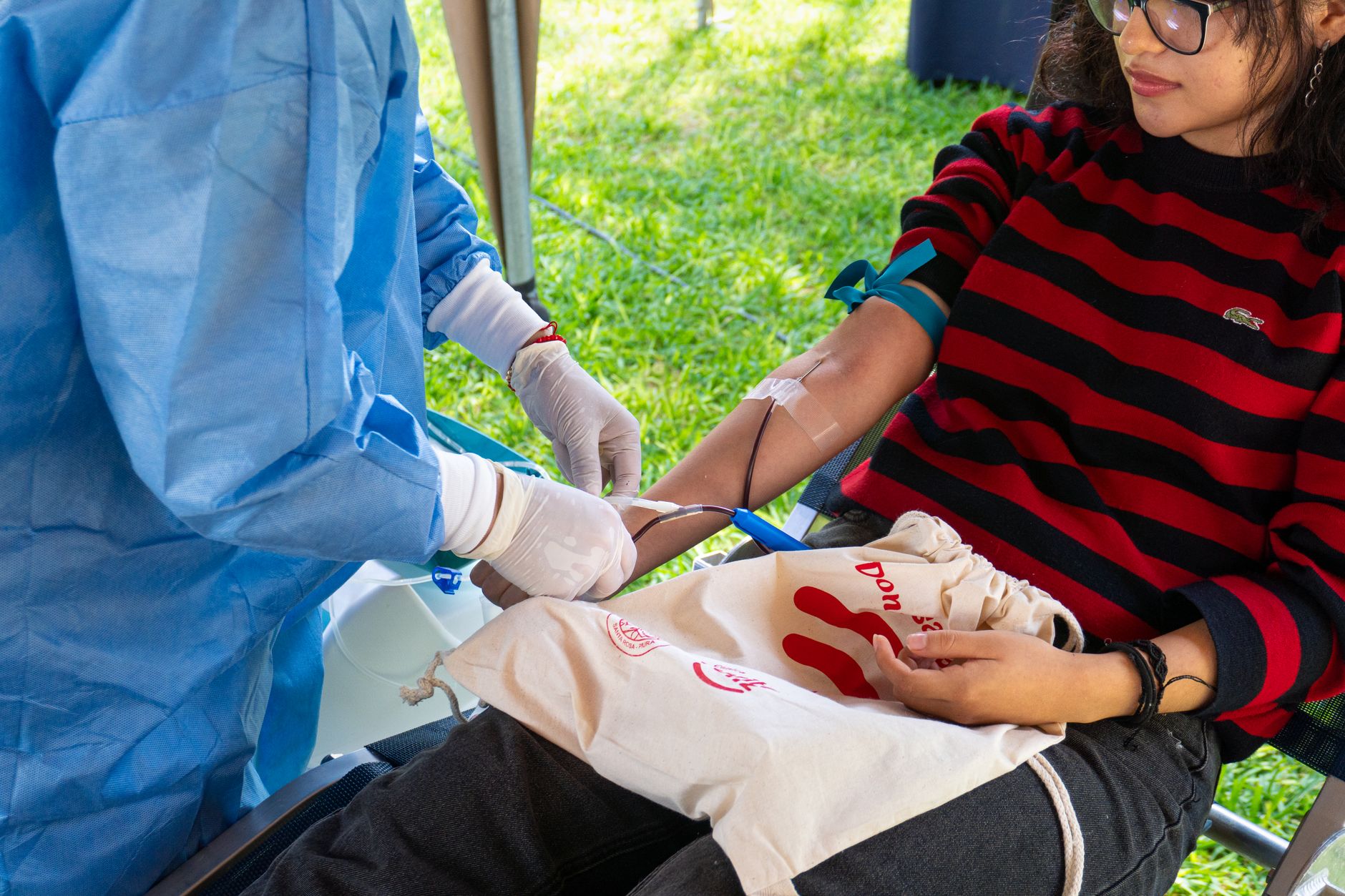
- The donation: You lie or sit in a reclining chair. The inside of your arm is cleaned with antiseptic and a needle is inserted into a vein. Most donors describe the needle as a brief sharp pinch, after which there is little to no pain. You squeeze a small device intermittently to keep blood flowing. The collection itself takes less than ten minutes.
- Recovery: You rest for ten to fifteen minutes and are given refreshments — juice, water, biscuits or crackers — to help stabilise your blood sugar and encourage you to rehydrate. Staff will monitor you before you leave.
For plasma donation, the process is the same up to the collection phase, where the apheresis machine takes over in cycles. You'll feel the returning blood as slightly cool. The room is usually warm and quiet; many centres provide blankets and entertainment.
How to Prepare So Your Donation Goes Smoothly
Small preparations make a real difference, especially for first-timers:
- Hydrate well in the 24 hours before, and especially on the morning of your appointment. Dehydration makes veins harder to access and can increase dizziness afterward.
- Eat a proper meal a few hours before. Low blood sugar is one of the main reasons people feel faint after donating.
- Wear comfortable clothing with sleeves that roll easily above the elbow.
- Avoid strenuous exercise for the rest of the day after donating.
- Increase iron-rich foods in the days before if you're a regular donor, as repeated donation can lower iron stores over time.
The Psychological Experience: Why Bodily Generosity Feels Different
Ask regular blood donors why they keep coming back and the answers are surprisingly consistent. There is a sense of purposefulness that is hard to replicate through other kinds of giving. Part of this is the physical reality of what you've done — you leave with a small plaster on your arm and the knowledge that your body just produced something that will keep another person alive. There is no metaphor involved. No abstraction.
Psychologists who study prosocial behaviour have noted that acts of giving which require physical presence and mild personal cost tend to produce stronger feelings of meaning and satisfaction than passive or financial forms of giving. Blood donation sits at an interesting intersection: it is low risk, low pain, and time-limited, yet it carries enormous symbolic and practical weight. You are giving something that is irreversibly yours — it carries your biology — to someone you will never meet.
Many donors describe a quiet, focused calm during the donation itself. You are sitting still, doing nothing except being useful. In a world that rewards constant activity, there is something almost meditative about that. Regular donors often speak of the appointment as a ritual — a fixed point in their schedule that reminds them of their connection to strangers and to community.
There is also the particular power of anonymity. You will almost certainly never know who received your blood or plasma. That absence of feedback, counterintuitively, can deepen the psychological effect. You gave without any expectation of acknowledgment, which is a purer form of generosity than most daily life offers.
Bone Marrow Registration: A Different Kind of Commitment
Joining a bone marrow registry is an act of open-ended willingness. You swab your cheek, your tissue type is catalogued, and then you wait — possibly for years, possibly forever. If you are ever matched to a patient, you will be contacted and asked to confirm your willingness to proceed. At that point, you can still withdraw, and registries make clear that you always retain that choice. But the hope is that you won't.
The psychological weight of that potential commitment is real. Some people find it daunting; others find it quietly motivating, a background sense of possible purpose. Donors who do go on to complete a marrow or stem cell donation often describe it as one of the most significant experiences of their lives — not because it was dramatic, but because the stakes were so clear and the connection to another human being so direct.
If you're drawn to this kind of giving, it's worth reading real accounts from donors who have been through the process. Success stories from registry donors can give you a genuine sense of what the experience involves emotionally, not just physically.
How to Get Started
The simplest first step is to find your national or regional blood service and book an appointment online. In the United States, the American Red Cross and Vitalant are among the major organisations. In the United Kingdom, NHS Blood and Transplant coordinates blood, plasma, and marrow donation nationally. Australia has the Australian Red Cross Lifeblood service. Most of these organisations have online eligibility checkers and appointment booking systems that take a few minutes to use.
For bone marrow, registries such as Be The Match (US), Anthony Nolan (UK), and DKMS (operating internationally) allow you to request a free swab kit by post.
If you are exploring broader ways to give your time in a sustained and meaningful way, blood and plasma donation sits naturally alongside other forms of community volunteering — but with the added quality of doing something that is uniquely possible only because you, specifically, have a body that produces what someone else urgently needs.
A Final Thought on What You're Actually Giving
Most forms of giving can be replicated. If you can't bake for a fundraiser, someone else will. If you can't staff the helpline that week, another volunteer takes your shift. Blood and marrow are different. Your tissue type is yours alone. On a given day, in a given hospital, the person waiting for a transfusion needs blood that is safe and compatible, and the only way that exists is because people like you made an appointment and showed up.
That specificity — that irreplaceability — is what makes bodily generosity so psychologically unusual. You are not just giving time. You are giving something that was, until very recently, inside you. And that, in the most literal sense, is part of yourself.