There is a meaningful difference between being told that generosity matters and being placed in a room where you must decide — with real consequences — exactly where a limited pool of resources will go. The first is a lesson. The second is an experience. Participatory philanthropy education for students is built on the conviction that only the second one truly sticks.
What Participatory Philanthropy Education Actually Is
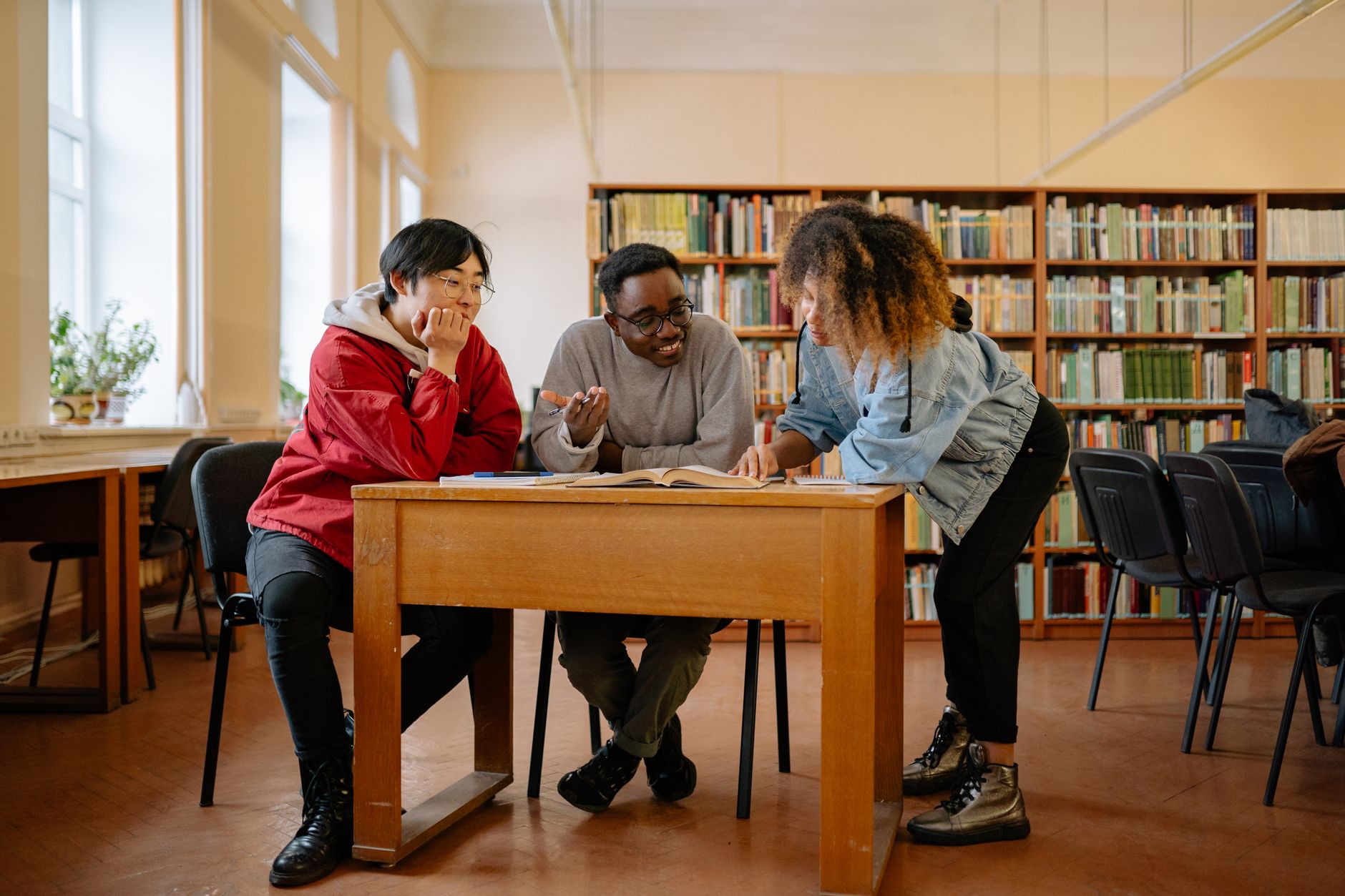
At its core, participatory philanthropy education puts students in the role of grantmakers. A classroom, school, or youth program is given a real pot of money — sometimes donated by a foundation, sometimes raised by the school itself — and students go through an authentic grantmaking process: researching nonprofit organizations, evaluating applications, debating priorities, and making final funding decisions that are then honored in the real world.
This is not a simulation. The nonprofits that receive funding genuinely needed it. The organizations that do not receive it go without. That weight is intentional. It is also, educators report, transformative.

As an Amazon Associate, I earn from qualifying purchases.
Programs of this kind exist under several names — youth grantmaking, student philanthropy councils, classroom giving circles — but they share the same underlying structure: students are not observers of generosity but agents of it.
Why Being the Decision-Maker Changes Everything
The Emotional Complexity of Saying No
One of the most underappreciated dimensions of participatory giving is that students must say no to worthy causes. When a class has $2,000 to distribute and five compelling nonprofit proposals in front of them, every yes is also a no to something else. This is not a scenario most young people — or most adults — encounter in typical charitable giving, where you simply choose what you personally care about and donate accordingly.
When students experience this scarcity firsthand, something shifts. They begin to understand that even people with enormous resources face genuine trade-offs. They feel the pull of competing needs — should the money go to local food insecurity or global health? To environmental restoration or after-school programs for underserved youth? There is no objectively correct answer, which forces students to examine and articulate their own values in a way that an essay prompt simply cannot replicate.
Empathy That Is Earned, Not Assigned
Reading about poverty produces some empathy. Meeting a program director who serves families experiencing homelessness, asking her hard questions about her organization's budget, and then voting on whether her program receives funding produces something considerably deeper.
As an Amazon Associate, we earn from qualifying purchases.
In well-designed participatory philanthropy programs, students interact directly with the organizations they evaluate. They conduct site visits, listen to beneficiary stories, and interrogate impact data. This active engagement forces them outside their own frame of reference in a way that passive learning rarely does. Empathy becomes something they have worked for — and that investment makes it more durable.
Civic Agency: The Belief That Your Decisions Matter
Civic agency — the sense that one's actions can meaningfully shape the world — is one of the most important and most fragile things educators try to cultivate. It is notoriously difficult to build through instruction alone, partly because young people are justifiably skeptical of lessons that seem disconnected from real consequences.
Participatory philanthropy sidesteps this problem entirely. When a student's vote determines whether a community garden receives $500 or nothing, the consequences are demonstrably real. The garden either gets funded or it doesn't. This is not a practice run. That directness is enormously powerful for developing the conviction that individual choices matter — which is, at bottom, the engine of all civic participation.
How These Programs Are Structured in Practice
The Grantmaking Cycle in the Classroom
Most student philanthropy programs mirror the professional grantmaking cycle, scaled appropriately for age and time. Students typically begin with a learning phase: they study the issue area their giving pool will address, explore how nonprofits operate, and learn to read financial statements and program reports at a basic level. This phase alone delivers substantial education in financial literacy, critical thinking, and systems awareness.
Next comes an application review phase, where students read or listen to proposals from nonprofits seeking funding. They develop evaluation criteria — effectiveness, need, community rootedness, transparency — and apply those criteria consistently across proposals. This requires negotiation among classmates who may prioritize different values, introducing the collaborative and sometimes contentious reality of collective decision-making.
Finally, students deliberate and vote, then communicate their decisions to the organizations involved. Some programs also include a follow-up phase where students track how their grants were used, closing the loop and reinforcing accountability.
Age-Appropriate Variations
These programs are not limited to high school students. Elementary-age children can engage meaningfully with simplified versions, often focusing on local causes they can directly observe — a neighborhood food pantry, an animal welfare organization, a community garden. The scale of the decision-making is smaller, but the emotional and cognitive work is equally genuine.
Middle schoolers are often capable of engaging with more complex issue areas and can handle a fuller grantmaking cycle. High school students can take on sophisticated analysis, including comparative impact evaluation and conversations about systemic versus symptomatic approaches to social problems.
The Hidden Curriculum: What Students Learn Without Being Taught It
That Good Intentions Are Not Enough
One of the most valuable — and occasionally uncomfortable — lessons students encounter is that a nonprofit's good intentions tell you very little about its effectiveness. Organizations can be led by deeply caring people who are nevertheless inefficient stewards of resources, or who serve relatively few people at high cost. Learning to ask hard questions about evidence and impact, even of organizations doing genuinely important work, is a form of sophisticated ethical reasoning that students carry well beyond the classroom.
That Disagreement Can Be Productive
Student giving circles routinely produce genuine disagreements. Two students with equally generous impulses can look at the same proposal and reach opposite conclusions about its merit. Learning to disagree respectfully, to listen to an argument that changes your mind, or to hold your position under pressure while remaining open to persuasion — these are civic skills that transfer directly to democratic participation.
That Generosity Has a Structure
Most young people's experience of giving is informal: dropping coins in a collection box, participating in a school fundraiser, doing a kind act for a neighbor. Participatory philanthropy reveals that organized generosity has architecture — that there are institutions, processes, and professionals devoted to making charitable resources work as effectively as possible. This demystifies philanthropy and makes it legible as a field that students could, if they chose, enter or influence as adults.
What Makes These Programs Work — and What Makes Them Fall Flat
The Non-Negotiable: Real Stakes
The single most important ingredient is that the giving must be real. Programs that ask students to allocate hypothetical money, or where the final decisions are overridden by adults, lose almost all of their transformative power. Students are perceptive; they know when their agency is genuine and when it is theater. Only genuine stakes produce genuine engagement.
Skilled Facilitation Without Adult Capture
Teachers and program facilitators play a crucial role, but the wrong kind of involvement undermines the exercise. The facilitator's job is to ensure a fair process, provide information students need, and surface assumptions that go unexamined — not to steer students toward the "right" choice. Programs that become vehicles for adults to channel money to their preferred causes while using students as cover are not participatory philanthropy; they are something closer to the opposite.
Reflection Built Into the Process
The decisions students make are rich material for structured reflection. What values drove your recommendation? What made this decision hard? What would you do differently with more information or more money? Without deliberate processing, much of the learning remains tacit. With it, students can articulate what the experience taught them — a skill that itself reinforces the learning.
Broader Implications: Growing a Generation of Thoughtful Givers
The long-term ambition of participatory philanthropy education is not to produce professional philanthropists. It is to produce adults who give thoughtfully, engage civically with genuine conviction, and understand generosity as something more than a feeling — as a practice with craft, complexity, and consequence.
Research on habit formation consistently shows that behaviors practiced in formative years, particularly when they are emotionally engaging, tend to persist. A student who has experienced the full arc of charitable decision-making — research, deliberation, decision, accountability — has a qualitatively different relationship to giving than one who has only ever dropped money into a box. They know what thoughtful generosity feels like from the inside, and that knowledge is difficult to unlearn.
There is also something worth noting about what these programs model about community. They demonstrate that resources held collectively, and decisions made together, can accomplish things that individual action cannot. That is not a small lesson. It is, in many ways, the foundational premise of democratic society.
Getting Started: For Educators and Program Designers
If you are an educator or program designer interested in bringing participatory philanthropy into your context, a few practical starting points are worth considering. Several national organizations — including Learning to Give and the Council on Foundations' youth philanthropy initiatives — provide curriculum frameworks and, in some cases, connections to funding sources for classroom giving pools. Many community foundations have dedicated youth grantmaking programs and actively seek school partnerships.
The giving pool does not need to be large to be effective. Programs operating with a few hundred dollars report the same core learning outcomes as those working with thousands, because the cognitive and emotional work scales with the stakes, not the absolute dollar amount. What matters is that the money is real, the decisions are honored, and the process is genuinely student-led.
For more on the habits and structures that make generosity meaningful and sustainable, exploring practical giving tips can help both educators and students think more carefully about how thoughtful generosity is built over time.
Conclusion: Learning Generosity by Doing It
Participatory philanthropy education works because it refuses to treat generosity as a value that can be transmitted through description alone. It insists that students must feel the weight of a real decision, navigate genuine disagreement, and live with outcomes they produced — to understand what giving actually involves.
The classroom becoming a giving circle is not a metaphor for learning about civic life. It is civic life, conducted at an appropriate scale, with all the difficulty and meaning that entails. That is precisely what makes it worth doing.