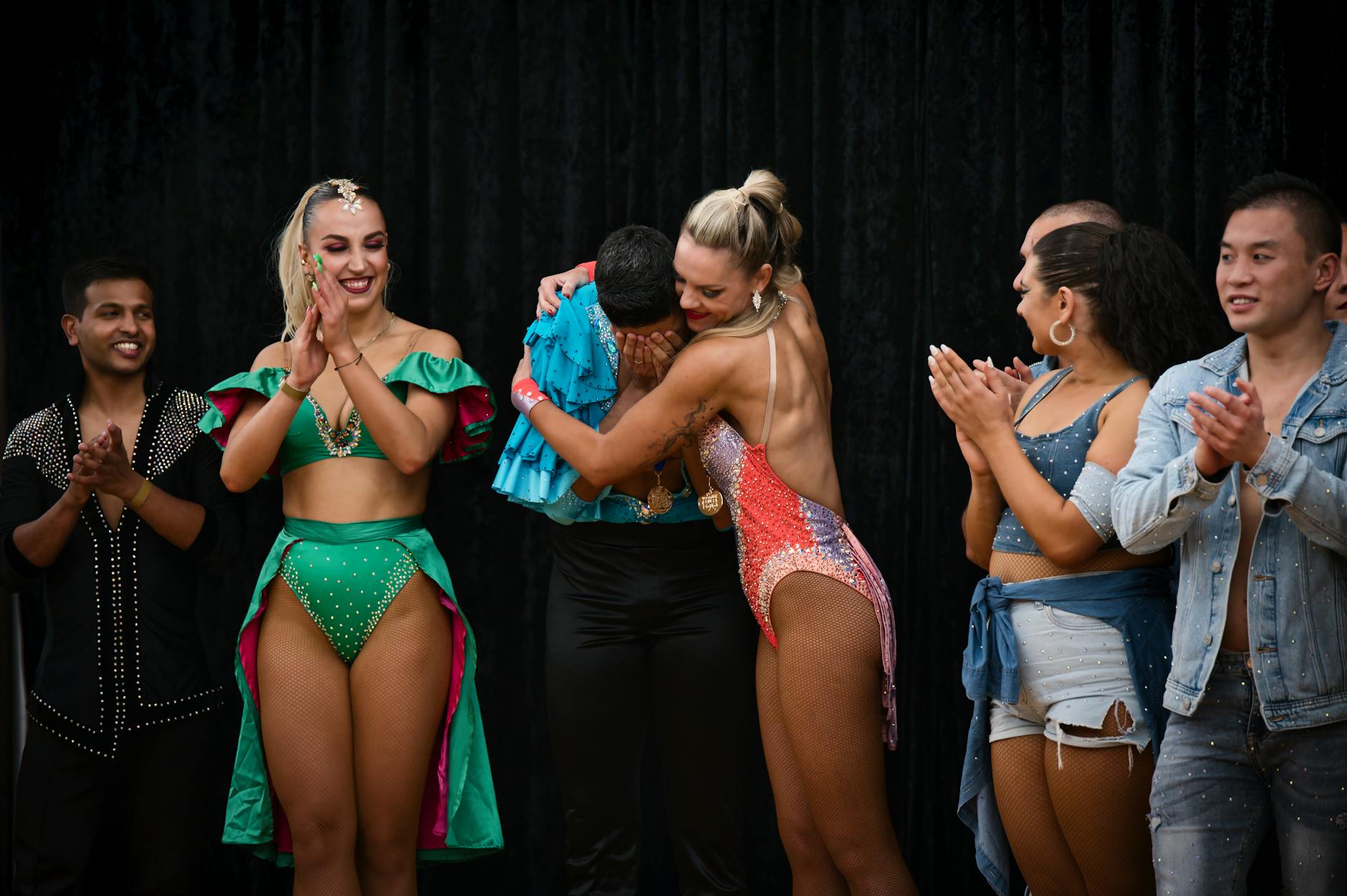
Every year, crowds gather in banquet halls, stadiums, and town squares to watch someone walk to a podium and receive an honor. The object handed over — a plaque, a ring, a framed certificate — is rarely valuable in any material sense. Yet the person receiving it is often visibly moved in a way that no expensive present ever quite achieves. There is something happening in that moment that cuts deeper than commerce. Recognition as a gift operates on a different register than ordinary giving, and understanding why tells us a great deal about what human beings actually need from one another.
What Makes Recognition a Gift at All?
Philosophers and anthropologists have long distinguished between exchange and gift. A transaction is symmetrical — you give, you receive something of equivalent value back. A gift, classically understood, is asymmetrical. It creates a relationship rather than settling one. When a community inducts someone into a Hall of Fame or publicly honors a retiring teacher, nobody is balancing a ledger. They are doing something more intimate: they are saying, we saw you, we remember you, and we are choosing to hold you in our shared story.
That act of being witnessed is what elevates recognition above mere praise. Praise can be private, fleeting, even strategic. Recognition is public, permanent, and communal. It involves a community staking its own credibility on the claim that this person mattered.

As an Amazon Associate, I earn from qualifying purchases.
The Psychology Behind Being Honored
Psychologists studying motivation have consistently found that humans possess a fundamental need not just to achieve, but to have their achievements acknowledged. Self-determination theory, developed by researchers Edward Deci and Richard Ryan, identifies relatedness — feeling genuinely connected and valued by others — as one of the core needs driving human wellbeing. Public recognition is a concentrated dose of relatedness: it is the community saying, in the most formal way it knows, that you belong and that you contributed.
This is why even people who claim to be indifferent to honors often find themselves unexpectedly emotional when one arrives. The intellectual self can dismiss awards as arbitrary; the deeper self knows that being publicly claimed by a group is something older and more necessary than any individual achievement.
There is also a cognitive dimension. When a community enshrines someone's contribution — carves a name on a wall, mounts a photograph in a hallway, reads aloud a biography at an induction ceremony — it is performing an act of collective memory formation. The honoree is no longer just a private person with a private history. They become part of the group's identity, which means they survive, in some sense, beyond their own lifetime.
Hall of Fame Inductions: A Ritual Worth Taking Seriously
Hall of Fame ceremonies are easy to dismiss as sports spectacle or industry backslapping. But anthropologists would recognize them immediately as rituals with serious social function. A ritual is not mere repetition — it is a structured, symbolic act that transforms the status of participants and reinforces group values. The Hall of Fame induction does exactly this.
The inductee enters as a private citizen with a notable past. They exit as a representative figure — a carrier of what the community considers worth remembering. The speeches given at these ceremonies are not summaries of résumés. They are moral narratives: stories about perseverance, integrity, sacrifice, and craft. By honoring one person, the community is publicly declaring what it values. This is why disputes over Hall of Fame selections are so passionate — they are really arguments about what a community stands for.
The Three Layers of a Recognition Ceremony
Look closely at any formal honor — sports induction, community award, lifetime achievement — and you find three distinct layers operating simultaneously.
The personal layer is what the honoree experiences: a moment of being fully seen, of having one's contribution declared real and lasting. This can resolve decades of doubt and effort into something concrete.
The relational layer is what happens between the honoree and the community. The bond is renewed and deepened. Old members are reminded of shared history; newer members are brought into a story that predates them. This is how institutions transmit culture across generations.
The normative layer is perhaps the most quietly powerful. By choosing who to honor and how to frame the honor, the community broadcasts its values to itself. Young people watching a ceremony absorb lessons about what kinds of effort, character, and contribution are considered worthy. Recognition ceremonies are, in this sense, a form of moral education conducted in public.
Everyday Recognition and the Same Underlying Logic
Hall of Fames are the dramatic tip of an iceberg. The same logic applies at every scale. A school that publicly acknowledges a student's improvement — not just their top marks — is performing a version of the same ritual. A neighborhood that holds a small ceremony for a retiring mail carrier is doing the same thing. A family that gathers to toast a grandmother's seventieth birthday is participating in the same ancient human practice.
What makes these moments powerful is not their production value. It is the genuine attention of the community. When people gather specifically to say you mattered here, the size of the room is irrelevant. A handwritten letter read aloud to a small group can be more transformative than a plaque presented in a stadium, if the attention behind it is real.
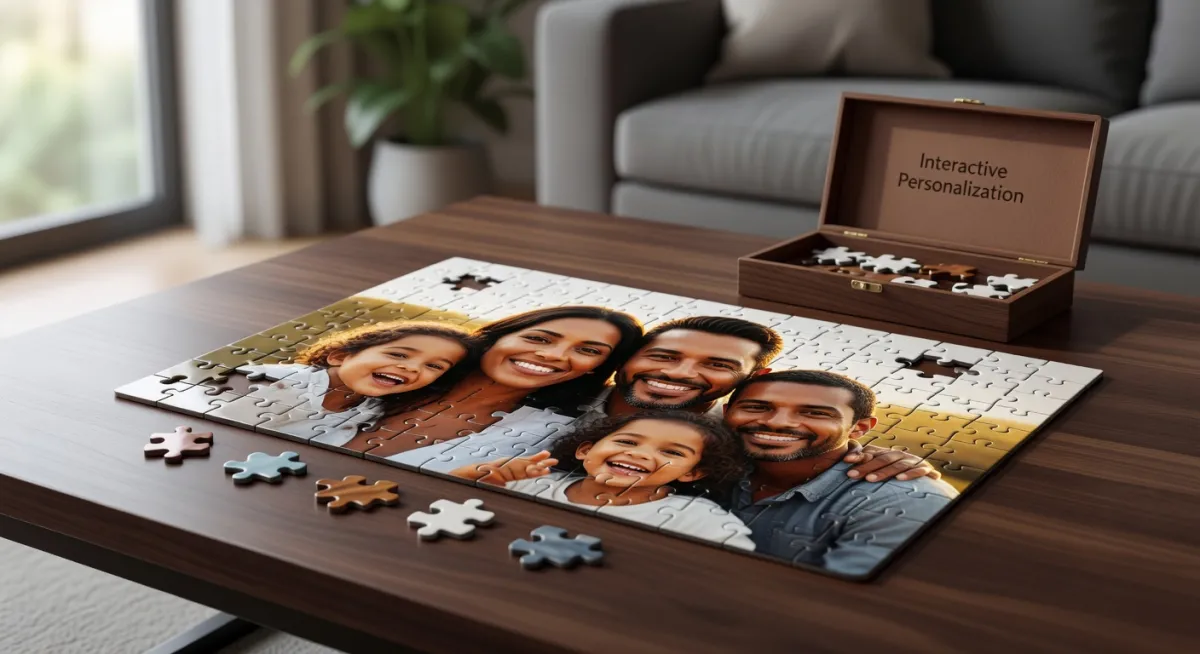
This is why personalized gifts so often outperform expensive ones — the underlying mechanism is the same as formal recognition. The gift says: I noticed you specifically. I paid attention to who you are. That specificity is the real offering, and it is available to anyone regardless of resources.
Who Gets Left Out — and Why It Matters
The history of formal recognition is also a history of exclusion. For most of the twentieth century, Halls of Fame in sports, arts, and industry systematically overlooked women, people of color, and those from marginalized communities — not because their contributions were smaller, but because the communities controlling recognition did not fully claim them as members. The omission was not neutral. It actively shaped collective memory, telling future generations a distorted story about who had contributed and who belonged.
This is why debates about expanding recognition — about honoring previously overlooked figures, retroactively acknowledging erased contributions — are not exercises in sentimentality. They are arguments about the accuracy of a community's self-understanding, and about who gets to feel that they belong to its ongoing story. Inclusive recognition is not a courtesy extended to the margins. It is a correction to the center.
The Giver's Experience: Why Honoring Others Is Good for Communities Too
Much of the psychology of recognition focuses on the recipient. But the community doing the honoring also receives something. The act of formally recognizing another person requires the group to articulate its own values, review its own history, and make a collective judgment. These are not passive activities. Done well, they build the kind of reflective, coherent group identity that holds communities together over time.
Research in positive psychology consistently suggests that expressing gratitude — which is what public recognition essentially is — benefits the expresser as well as the recipient. A community that regularly honors its members is practicing a form of collective gratitude, reinforcing a shared sense that human effort is noticed and meaningful. Communities that neglect this, that let contributions pass without acknowledgment, tend toward a kind of social amnesia — a loss of the connective tissue that makes collective endeavor feel worthwhile.
For those looking to apply this thinking in their own contexts, it is worth considering how the community spotlights you create — whether in a workplace, a neighborhood organization, or a family — shape belonging as much as any physical gift you could give.
Recognition Without Ceremony: The Informal Gift
Not every act of recognition requires a stage or a committee. Some of the most powerful instances happen in ordinary exchanges: a manager who remembers to mention, months later, a specific contribution an employee made; a friend who references, in passing, something you said that changed how they think; a mentor who tells a room of strangers about a former student's work. These informal moments follow the same logic as a Hall of Fame induction. They say: I held this. You did not disappear from view. You exist in my memory and in my telling of what matters.
The cost is zero. The effect can be lasting. This is one of the genuinely remarkable features of recognition as a form of giving — unlike almost every other valuable gift, it is not depleted by the giving. The community that honors one member does not have less to offer others. Attention, when it is genuine, is renewable.
What This Means for How We Give
If recognition is genuinely one of the most powerful gifts a community can offer, several practical implications follow. Ceremonies matter — not because of their pomp, but because of the public, explicit, communal nature of the commitment they enact. The more people witness an honor, the more binding its claim on collective memory becomes. Specificity matters even more. Generic praise is pleasant but forgettable; recognition that names exactly what a person did and why it mattered is the version that changes something.
Timing matters too. Recognition deferred — the appreciation expressed only in a eulogy, the honor given only after the honoree has left — is not wasted, but it is diminished. The psychological weight of being recognized while you can still act on it, while you can still carry it into your ongoing life, is different in kind from posthumous acknowledgment.
And perhaps most importantly: exclusivity is not necessary. The impulse to make recognition scarce — to limit Hall of Fame spots, to give awards to only one person — is understandable as a way of signaling that the honor means something. But communities that find ways to recognize broadly, that build cultures of regular and specific acknowledgment rather than rare ceremonial peaks, tend to produce more of the belonging and collective memory that make groups worth being part of in the first place.
A Different Way of Thinking About What We Owe Each Other
The tradition of Hall of Fame inductions, at its best, is pointing at something that operates at every level of human community: that seeing people clearly and saying so publicly is a profound act of care. It asks nothing material of the giver. It costs no more than attention and the willingness to speak. Yet it can do what very few expensive gifts accomplish — it can make someone feel that their existence, and their effort, was woven into the fabric of a shared life rather than lost in the noise of passing time.
That is not a small thing. It may, in fact, be among the largest things communities are capable of giving to their members. And unlike most large things, it is available to everyone who is willing to pay genuine attention.