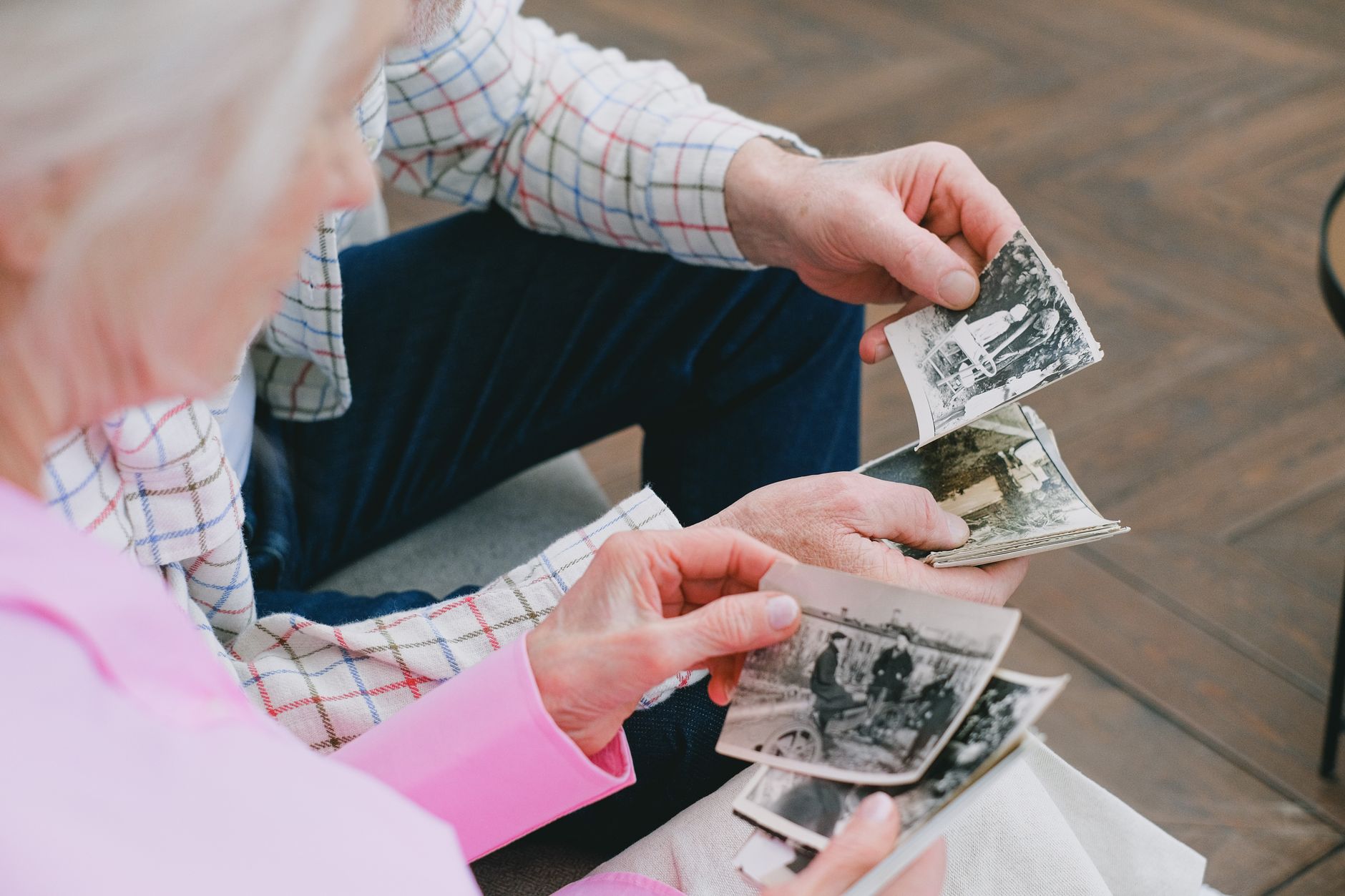
Think about the first gift you ever gave a close friend, a partner, or a sibling you've known for decades. Now think about what you gave them most recently. Chances are those two objects — or experiences, or gestures — look almost nothing alike. That gap is not just a reflection of changing tastes or budgets. It is a record. The evolution of gift-giving within a long-term relationship is one of the most honest autobiographies two people will ever write together, and almost nobody reads it deliberately.
Why Gifts Are Never Just Objects
Gift-giving is one of the oldest and most studied forms of human social behavior. Sociologist Marcel Mauss, writing in the early twentieth century, argued that gifts are never truly free — they carry obligations, identity, and social meaning far beyond their material value. But in long-term relationships, something even more specific happens: gifts become vessels for accumulated knowledge of another person. What you choose to give someone is a direct expression of how well you know them, how much attention you have paid, and what you believe the relationship is for.
Early in a relationship, gifts tend to signal aspiration — what you hope the connection will become, what kind of person you want to appear to be, what impression you are trying to make. Later gifts signal something entirely different: recognition. The shift from one mode to the other is rarely announced. It just happens, quietly, over years.
The Early Phase: Gifts as Introductions
In the beginning of any meaningful relationship — romantic partnerships, friendships, even close professional bonds — gifts function largely as social signals. They say I see you, but they also say look at me seeing you. There is genuine effort, but it is effortful in a particular way: the giver is working hard to appear thoughtful rather than to actually be intimate.
This is not cynical. It is human. When you do not yet know someone deeply, a gift requires research, inference, and risk. You default to what seems universally appealing — a good bottle of wine, a bestselling novel, a beautiful candle. These are safe gifts, and safe gifts are, by definition, somewhat impersonal. The early-phase gift tells you a lot about the giver's social intelligence and cultural fluency, but relatively little about what they actually understand about the recipient.
Psychologists who study relationship development note that this early phase of gift-giving is marked by anxiety about getting it wrong. The stakes feel high because the relationship itself is fragile, and a badly received gift can genuinely signal incompatibility or inattentiveness. This anxiety is a feature, not a flaw — it reflects appropriate sensitivity to a relationship that has not yet been tested.
The Middle Phase: Gifts as Proof of Attention
As a relationship deepens, the nature of good gift-giving changes fundamentally. The standard moves from universally appealing to specifically right. A gift that would thrill almost anyone becomes less impressive than a gift that would thrill only this particular person, the one who mentioned something in passing eight months ago that you quietly filed away.
This is the phase where gift-giving becomes genuinely intimate. The best gifts in a long-term relationship are often small in monetary value but enormous in relational weight — they prove that you were listening when it did not seem to matter, that you carry a mental model of this person around with you even when they are not present. Receiving such a gift can feel startling, even moving, precisely because it is evidence of sustained, unannounced attention.
This phase also introduces a new risk: the gift that exposes how well you know someone can also expose how well you do not. Partners and close friends who believe they are deeply attuned to each other sometimes discover, through a badly chosen gift, that they have been working from an outdated model of who the other person is. The gift they would have loved five years ago lands flat today. This is not a crisis, but it is information.
The Long-Term Phase: Gifts as Ritual and Shorthand
In relationships that have lasted many years or decades, gift-giving often transforms again. The pressure to demonstrate knowledge of the other person relaxes — that knowledge is now assumed, taken for granted in the best sense. Gifts in this phase can become ritualistic: the same type of holiday tradition, a shared joke rendered physical, an experience revisited because the first time mattered. These gifts derive their meaning almost entirely from their history within the relationship rather than from their intrinsic qualities.
A box of the same chocolates given for the twentieth consecutive year is, on the surface, a lazy gift. In the context of a forty-year friendship, it may be a profound one. The repetition is the message: I remember. We are continuous. We are still here. Ritual gifts in long relationships function less as surprises and more as affirmations — they do not seek to reveal new knowledge of the other person but to honor the accumulated knowledge that already exists.
This phase also tends to see a loosening of the gift as object. Long-term partners frequently report that the most meaningful gifts become less tangible over time: a reserved afternoon with no obligations, an act of service, the deliberate recreation of an early shared memory. The gift economy shifts from the material to the temporal and the experiential, because what long-term partners most need from each other is often attention itself.
When Gifts Reveal Relationship Trouble
Because gift-giving tracks so closely to relationship health, disruptions in gift-giving patterns are often early indicators of deeper problems. A partner who has always given thoughtful, specific gifts and suddenly defaults to the generic may be communicating emotional withdrawal without having the language for it. A friend who stops giving gifts entirely in a culture where they were previously exchanged may be signaling disengagement. And crucially, both parties usually sense the change even before they can articulate it.
Gift-giving research consistently finds that recipients are surprisingly good at inferring relational information from gifts — they can often detect whether a gift was chosen with care or purchased hastily, and they draw conclusions about the relationship's status from that inference. This happens largely unconsciously, which is part of why a bad gift can create an unease that neither person can quite explain.
The reverse is also true. A gift that represents unusual effort — particularly from someone who has grown distant — can function as a repair attempt, an olive branch wrapped and ribboned. People use gifts to say things they cannot say in words, and in troubled relationships, they often use them to say I am still trying.
The Objects That Never Leave: Inalienable Gifts
Not all gifts remain in ordinary circulation. Some objects given within close relationships acquire a status that places them entirely outside normal exchange. Anthropologist Annette Weiner's concept of 'inalienable possessions' — objects so tied to a relationship or identity that they are never exchanged away — has been applied to understanding why certain gifts become irreplaceable relational artifacts. These are the gifts that survive house moves, breakups, and decades of decluttering. They are kept not because they are beautiful or useful but because to give them away would be to erase something irreplaceable about a relationship or a moment in a life.
Most people have at least one of these. A battered paperback with a handwritten note inside. A piece of jewelry from a grandparent. A drawing made by a child. The object itself may be objectively unremarkable. Its value is entirely relational — it holds the relationship within it in a way that cannot be replicated or transferred. These inalienable gifts are, in a sense, the most distilled version of what all long-term gift-giving is reaching toward: the transformation of an ordinary object into an archive of connection.
Reading the Archive You Have Already Written
If you wanted to understand the shape of your most important relationships, you could do worse than to trace the history of gifts exchanged within them. What did you give in the first year, and what would you give now? Where did you try too hard, and where did you stumble into something perfect? What gifts do you still own from people you have loved — and what does it mean that you still own them?
This is not a sentimental exercise. It is a genuinely revealing one. The gifts we give and receive over time map the arc of our attention, our assumptions, our growing and sometimes failing knowledge of the people we love. They record which version of a person we saw at a given moment, and whether we were paying close enough attention to see them accurately.
The best givers over the long term share one quality: they keep updating their model of the other person. They do not give to who someone was years ago. They give to who that person is becoming. That quality — sustained, evolving attention — is itself the gift underneath all the gifts, and it is the one that actually builds a relationship over time.
Sources
Every factual claim in this article was independently verified against the following sources:
- Inalienable possessions - Wikipedia — en.wikipedia.org